|
On the Galapagos Islands,
holiday makers are a common
sight and many of the animals
that make the region their home
are accustomed to seeing people.
One of the most conspicuous
and prevalent animals on the
archipelago is the Galapagos
Sea Lion. They are also arguably
the most appealing of all the
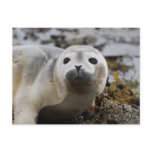
inhabitants; their cheeky faces
with a constant smile and their
huge, black, liquid eyes have
entranced boatloads of visitors
on Galapagos Island tours for
many years.
The Galapagos Sea Lions range
in size from about 50kgs up
to 400kgs for a full grown male.
Males are slightly darker than
the females - although it is
hard to tell when they are wet
- and they have a distinctive
bump on their heads. The main
characteristic which differentiates
the sea lions from their close
relative, the seal, is their
external ear-like flaps. The
sea lions are extremely agile
in the water; their front flippers
control them but their back
flippers move independently,
allowing them easy passage on
land as well as acting as a
rudder to help them turn quickly
in the water.
Although they spend much of
their time fishing and swimming,
the sea lions also love sunning
themselves on the beach and
in tidal rock pools. They are
homebodies at heart and seldom
venture further than about 15km
from the shore. They are very
approachable and quite placid;
however care needs to be taken
with the larger bulls. In many
locations you can swim freely
amongst the sea lions without
causing a fuss. They may show
some interest but mainly just
get on with their daily business,
not paying too much heed to
their human companions enjoying
their Galapagos Islands holiday!
A favourite game the sea lions
love to play is to swim towards
you at great speed, and then
veer off at the last moment.
Hold your nerve and it can be
a delightful experience.
The Galapagos Sea Lions live
in colonies consisting of about
thirty females dominated by
one bull, and the remainder
of the males live in bachelor
colonies. There is a constant
war between the males as they
vie to dominate the breeding
colony, often culminating in
a bloody battle. Sometimes however,
the dominant bull becomes so
weary from his breeding duties
and lack of food he simply surrenders
and slinks off to join the bachelors
group, conceding to the next
young male!
One of the main drawcards that
brings so many people on their
Galapagos Islands holiday to
visit the sea lion colonies
is the inquisitive and endearing
faces of the pups. Female sea
lions carry their pups for around
eleven months. After they are
born it is about five months
before they learn to fish for
themselves, but the mothers
continue to suckle them sometimes
well beyond twelve months. Due
to the constant breeding cycle,
this can often mean that a mother
is still suckling one pup when
she gives birth to her next.
Although numbers of the Galapagos
Sea Lions are now growing, they
are still listed as vulnerable.
In 1979 there were about 50,000
living on the islands, but years
of El Niño cycles and human
interference saw numbers dwindle
to less than 16,000 in 2001.
The main problems have been
the'long nets'that fishermen
use, which entangle the sea
lions, together with fish hooks
and outboard propellers - deadly
temptations for inquisitive
juveniles.
Another danger for these beautiful
creatures is unfortunately human
waste and refuse left by visitors
on their Galapagos Islands holiday.
By raising awareness of these
ecological issues however, scientists
monitoring numbers on the islands,
have reported a measure of marine
condition improvement, and the
population now fluctuates between
30,000 - 50,000.
On the Galapagos Islands, holiday
makers are a common sight and
many of the animals that make
the region their home are accustomed
to seeing people One of the
most conspicuous and prevalent
animals on the archipelago is
the Galapagos Sea Lion
About the Author
Louise Mumford is a holiday
specialist at South American
Experience, a company that specialises
in tailor-made arrangements
for a
Galapagos Islands Holiday .
Our dedicated team has two decades
of first-hand experience in
the Latin America region.
|